


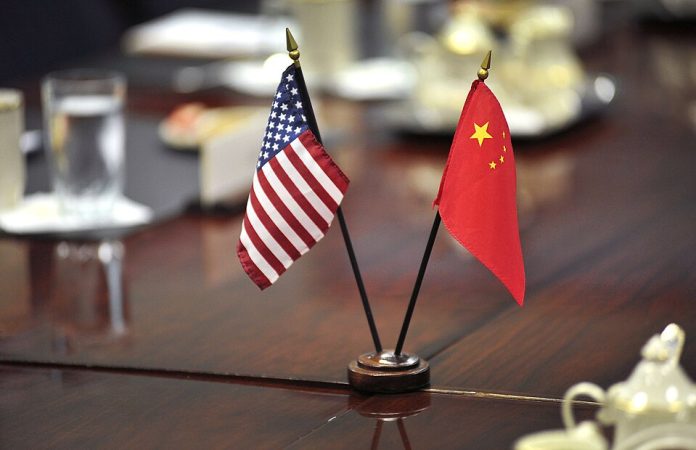
Between visions of chaos and hopes for a diffusion of power lies a harsher pattern. The global order is driven by a bipolar competition that none of the actors fully controls.
The international system stands at a peculiar juncture. As Antonio Gramsci observed during another era of upheaval, “the old world is dying, and the new world struggles to be born: now is the time of monsters.” Today’s global order exhibits similar characteristics, the post-Cold War unipolar moment has clearly ended, yet no stable replacement has emerged. What “monsters” stalk this interregnum? Uncontrolled migration destabilizing Western democracies, nuclear proliferation in unstable regions, cyber warfare eroding sovereignty, and authoritarian states weaponizing economic interdependence. Amid proclamations of American decline and multipolar futures, evidence from power metrics, recent policy outcomes, and structural realities suggests a counterintuitive conclusion. The world remains locked in bipolar competition between the United States and China, though this bipolarity itself may prove temporary.
This assessment requires acknowledging inherent difficulty in neutrality when analyzing one’s own country. American observers naturally view U.S. resilience more favorably than Chinese fragility; Chinese analysts reverse this bias. What follows attempts rigorous evidence-based analysis while recognizing these constraints.
The Measurement Problem
Understanding international power requires moving beyond impressionistic assessments to rigorous metrics. Jennifer Lind’s “The Multipolar Mirage” provides valuable methodology. Analyzing historical great powers since 1820, Lind establishes quantifiable thresholds: normal great powers possess 17-45% of the leading state’s GDP (median 27%) and 8-28% of its composite GDP×GDP per capita score (median 15%).
Applied to today’s landscape, these metrics reveal stark realities. China scores 130% of U.S. GDP and 36% on the composite metric this exceeds even the Soviet Union’s Cold War peak of 44% GDP and 16% composite score. The 2025 Asia Power Index confirms only China and the United States “exceed both the economic and military thresholds for great-power status.”
India, despite considerable growth, remains below thresholds. Ashley Tellis’ “India’s Great-Power Delusions” shows even optimistic projections place India at only half China’s GDP by 2050, with defense spending around 2.4% of GDP while facing potential two-front threats. Russia’s GDP stands roughly 10% of America’s, below great-power thresholds despite nuclear arsenal and Ukraine aggression. Japan and Germany, constrained by defense spending below 2% of GDP until recently, similarly fail criteria.
Yet this methodology has limitations. GDP-based metrics may overstate China’s power if economic statistics are inflated, as some economists suspect. Conversely, they may understate qualitative factors like technological innovation, institutional quality, or alliance reliability. Nuclear arsenals receive insufficient weight despite being central to great-power status and Cold War bipolarity. The framework also struggles with how to assess the European Union’s collective $18 trillion economy, larger than China’s which lacks unified foreign policy yet wields substantial regulatory and economic power globally.
American Power: Genuine Strength or Coercive Overreach?
Recent events demonstrate American leverage, though interpretations diverge. President Trump’s February 2025 tariff offensive extracted significant commitments. For example NATO’s “Hague Commitment” pledging 5% GDP defense spending, Canada’s agreement to 5% defense increases, Japan’s accelerated commitment to 2% GDP defense spending by 2025 instead of 2027.
Compliance under coercion differs fundamentally from willing partnership enhancing collective power. Emma Ashford’s “Making Multipolarity Work” correctly warns that “aggressive unilateralism leaves allies unsure of whether the United States is friend or foe.”
The Trump National Security Strategy captures both American advantages and this tension: “America retains the world’s most enviable position, with world-leading assets” yet acknowledges “our elites badly miscalculated America’s willingness to shoulder forever global burdens.”
American structural advantages merit recognition. It has the largest economy ($28 trillion GDP), most advanced military (spending $916 billion in 2025), dominant reserve currency (88% of foreign exchange transactions involve dollars per Bank for International Settlements data), leading technology sector, and extensive alliance network. Defense industrial production is expanding, with shipbuilding capacity increasing 40% since 2023 and munitions production accelerating.
Yet vulnerabilities compound. Federal debt reached 123% of GDP in 2025.This is higher than China’s government debt-to-GDP ratio of approximately 77% (though local government debt adds substantially to China’s total). Political polarization has paralyzed legislative action on critical issues. The February 2025 government shutdown over debt ceiling negotiations lasted three weeks, rattling financial markets. The reindustrialization agenda, while addressing real strategic vulnerabilities, faces severe constraints including labor shortages in manufacturing with permitting delays averaging 4.5 years for major projects.
China’s Paradox: Powerful yet Fragile
China’s position as sole peer competitor appears solid by conventional metrics. The Asia Power Index documents China “continues to erode the United States’ advantage in military capability” while its “diplomatic influence reached an all-time high.” Beijing has built the world’s largest navy by hull count (370 ships versus 295 U.S. vessels), leads in several critical technologies including 5G infrastructure and electric vehicle production, and wields enormous economic influence across three continents through Belt and Road Initiative (BRI) investments exceeding $1 trillion.
This strength conceals profound vulnerabilities what Susan Shirk characterizes as the “fragile superpower” paradox. In Overreach: How China Derailed Its Peaceful Rise, Shirk documents how “China’s leaders view their country as more fragile than outsiders do,” operating from deep insecurity about regime legitimacy. This manifests in the party’s dual mandate, delivering economic growth and nationalist satisfaction becoming harder to fulfill.
Economic foundations are showing stress. The property sector, representing approximately 30% of GDP, remains troubled with developers defaulting on estimated $500-700 billion in obligations (lower than some cited figures but still substantial). Youth unemployment reached 21.3% in June 2023 before authorities ceased publication and subsequently “adjusted” methodologies showing 14.9% in mid-2025 remain disputed. Local government debt estimates range from $8-13 trillion depending on methodology for calculating off-balance-sheet obligations. Domestic consumption remains 54% of GDP versus 68% in the United States, indicating structural imbalances requiring painful rebalancing.
Demographics present perhaps the most intractable challenge. China’s working-age population peaked in 2015; United Nations projections show it declining by 200 million by 2050 even under medium-fertility scenarios. The Conference Board projects GDP growth averaging 3.5% through 2030, then 2.5% through 2040. If realized, and if the United States achieves 2-2.5% growth, China’s economy would still trail America’s by 2050, contrary to projections from the previous decade.
Yet dismissing China as inevitably declining repeats errors made about the Soviet Union, which was repeatedly declared moribund before its actual 1991 collapse. China’s advantages remain formidable: a literate, increasingly skilled workforce of 780 million, massive capital stocks enabling continued infrastructure investment, technological proficiency in critical sectors (quantum communications, hypersonics, AI applications), and industrial capacity producing 31% of global manufacturing output versus America’s 16%.
Beijing has demonstrated adaptive capacity. Following the 2008 financial crisis, China implemented the largest economic stimulus in history. After COVID-19 disruptions, authorities pivoted to “dual circulation” strategy emphasizing domestic consumption. The 2023-24 property sector interventions, while incomplete, prevented systemic collapse.
Most critically, China operates without formal alliances. This is a strategic isolation distinguishing it from the Soviet Union’s Warsaw Pact and America’s treaty network. Russia and North Korea provide limited support, and the Shanghai Cooperation Organization (SCO) and BRICS remain consultative forums lacking mutual defense commitments. This isolation both constrains Chinese power projection and eliminates alliance dilemmas that might divide attention and resources.
The Multipolar Mirage
Arguments for emerging multipolarity misread both capability and behavior. Lind observes that Russia’s great-power status would be confirmed if “it would have defeated Ukraine and threatened regional dominance over western Europe, as the Soviets did in the Cold War.” It has done neither, despite mobilizing 600,000+ troops and suffering an estimated 200,000+ casualties. Russia’s resurgence noted by the Asia Power Index reflects tactical gains from Chinese economic support and North Korean ammunition supplies, not restored structural strength.
India presents a more complex case. Tellis’ analysis in “India’s Great-Power Delusions” acknowledges India’s genuine growth while noting it “has fallen short of China’s reform-era achievements” of 9% annual growth over four decades. Prime Minister Narendra Modi’s embrace of Russian President Vladimir Putin in Delhi in December 2025, including a 36-hour state visit with extensive economic agreements, signals India’s determination to preserve strategic autonomy.
Yet as Tellis argues, “India’s relative weakness, its yearning for multipolarity, and its illiberal trajectory mean that it will have less global influence than it desires.” Even partnering with Japan, which committed to 2% GDP defense spending and deepened the Quad partnership provides insufficient capability to balance China independently. Japan’s GDP ($4.1 trillion) plus India’s ($3.9 trillion) totals only 44% of China’s $18.3 trillion, and their combined defense spending of approximately $180 billion falls well short of China’s estimated $314 billion (using more conservative estimates than official PRC figures).
The Lowy Institute assessment confirms middle powers remain domestically preoccupied. Southeast Asian states pursue hedging strategies reflecting not multipolar balance but bipolar pressure. As Lind predicts, the “don’t make us choose mantra” proves untenable “under bipolarity” when “small countries in a superpower’s backyard” face coercive pressures.
Ashford’s “Making Multipolarity Work” advocates embracing multipolar flexibility and “pushing allies to take on more of the defense burden.” She correctly identifies Trump administration moves in this direction but warns against “destroying the international economic system” through unilateral tariffs and sanctions. Her prescription, maintain economic openness, preserve multilateral institutions, emphasize soft power reflects reasonable concerns about alliance cohesion.
However, Ashford’s framework assumes multipolarity already exists or is emerging imminently. Her argument that second-tier powers including Australia, France, Germany, India, Japan, and Russia create multipolar dynamics conflates regional influence with global great-power status. These countries matter within their regions; none currently possesses the comprehensive power to shape outcomes globally across economic, military, technological, and diplomatic dimensions simultaneously. That capability remains exclusive to Washington and Beijing.
Nuclear Dimensions and the Bipolar Balance
One significant gap in GDP-focused metrics is nuclear weapons. According to the Stockholm International Peace Research Institute (SIPRI), the United States and Russia each maintain approximately 5,400 nuclear warheads, with 1,670 and 1,710 respectively deployed. China’s arsenal is estimated at 500 warheads, rapidly expanding toward projected 1,000+ by 2030 according to Department of Defense assessments. France and the United Kingdom possess 290 and 225 warheads respectively; India and Pakistan each maintain 170-180.
Nuclear arsenals confer disproportionate geopolitical weight. Russia’s ability to threaten nuclear escalation constrains Western responses to Ukraine aggression. China’s expanding arsenal complicates U.S. extended deterrence commitments to Taiwan, Japan, and South Korea. Yet nuclear weapons alone do not confer great-power status. If they did, North Korea and Pakistan would qualify.
The bipolar structure thus rests on comprehensive power combining economic scale, military capability (conventional and nuclear), technological sophistication, and global reach. Only the United States and China possess all dimensions. India’s nuclear arsenal and growing economy cannot compensate for limited power projection and economic scale one-fifth of China’s. Russia’s nuclear forces cannot offset an economy smaller than Texas’s.
The Wang Huning Fallacy—and Its American Mirror
Chinese ideologue Wang Huning’s 1991 America Against America predicted American self-destruction through internal contradictions. Observing uneven development, competing political forces, and spiritual crisis, Wang concluded American chaos would prove fatal. This reflected Marxist-Leninist assumptions that centralized control prevents chaos and ideological coherence enables stability.
History has repeatedly proven Wang wrong. The United States weathered Civil War, industrialization’s disruptions, Depression, racial upheaval, Watergate, multiple economic crises, and perpetual political tumult. Each crisis triggered adaptation such as expanded rights to minorities and women, technological innovation, restructured economic relationships, new alliances.
Yet Wang’s mirror image error in assuming American chaos signals terminal decline finds its counterpart in American assumptions that Chinese authoritarianism ensures brittleness. Both represent ideological projections rather than empirical analysis. Authoritarian regimes can adapt; the CCP has demonstrated this repeatedly. Democratic systems can calcify; America’s current polarization, institutional distrust, and legislative paralysis may represent not cyclical turbulence but structural decay.
Consider parallel vulnerabilities. The United States faces 123% debt-to-GDP ratio constraining fiscal flexibility, political polarization preventing coherent long-term strategy, infrastructure decay requiring estimated $2.9 trillion investment, and social fragmentation evident in declining life expectancy and rising deaths of despair. China in contrast confronts a property sector holding $65 trillion assets against massive debt, demographic decline eliminating 100 million working-age population by 2050, technological dependence in semiconductor manufacturing equipment, and CCP legitimacy tied to growth rates becoming harder to sustain.
Which set of challenges proves more manageable remains genuinely uncertain. American advantages in immigration (despite current restrictions), institutional adaptability, and innovation ecosystems provide paths to renewal. Chinese advantages in state capacity for infrastructure investment, industrial policy implementation, and social stability absent political competition provide different paths. Treating either country’s renewal as certain or either’s decline as inevitable reflects bias, not analysis.
Bipolarity’s Uncertain Duration: Three scenarios merit consideration
First, persistent bipolarity. In this scenario, China navigates economic transition successfully, sustains technological competitiveness, and maintains military modernization through mid-century. This requires solving demographic decline through automation and AI, rebalancing toward consumption-led growth, and maintaining innovation despite Xi Jinping’s tightening control. Simultaneously, the United States must manage its own debt crisis, infrastructure needs, and political dysfunction while maintaining technological edges. Both countries muddle through, neither decisively gaining advantage.
Second, renewed American unipolarity. In this scenario, Chinese growth decelerates below critical thresholds as property crisis metastasizes into broader financial instability, demographic decline overwhelms productivity gains, and authoritarian controls stifle innovation. Meanwhile, American industrial revival succeeds, technological advantages in AI and quantum computing compound, and alliance burden-sharing genuinely materializes. The Lowy Institute’s finding that U.S. power has fallen to the lowest level since the inception of the Index in 2018 represents a trough, not irreversible decline. China falls below great-power thresholds by 2040.
Third, a constrained multipolarity. In this scenario, India sustains 6-7% growth through 2050, Europe achieves genuine strategic autonomy through fiscal integration and expanded defense cooperation, and Japan’s remilitarization continues. China stabilizes economically at 3-4% growth, maintaining great-power status while losing relative ground to the United States. Multiple powers exceed great-power thresholds, though none rivals American comprehensiveness.
Current evidence suggests bipolarity persists medium-term (10-15 years) but faces pressures from both superpowers’ internal contradictions. China’s challenges appear more immediately threatening however the property bubble represents larger share of GDP, demographic decline is irreversible barring massive immigration (politically implausible), and Xi’s consolidation of personal power eliminates error-correction mechanisms. Yet American challenges, while different, are serious such as debt sustainability requires either tax increases or spending cuts both politically toxic, polarization prevents long-term strategic planning, and industrial revival faces entrenched comparative disadvantages in labor costs and regulatory environments.
Alliance Asymmetries and Burden-Sharing Realities
The Trump NSS asserts allies must “assume primary responsibility for their regions” and contribute “far more to our collective defense.” This represents necessary recalibration of unsustainable arrangements. The United States spent 3.5% of GDP ($916 billion) on defense in 2025; NATO European members averaged 2.1%, Japan spent 1.6% (rising toward 2% by 2027), and South Korea 2.8%.
However, the gap between burden-sharing rhetoric and reality remains vast. Germany’s pledge to reach 2% by 2025 was met only through accounting adjustments including pension contributions and infrastructure spending not directly enhancing military capability. France increased spending modestly but prioritizes expensive nuclear modernization over conventional forces useful for territorial defense. Italy and Spain remain below 1.5% despite repeated commitments.
Japan’s case illustrates constraints. Tokyo’s constitution, even after reinterpretation, restricts military operations to self-defense. Public opinion remains skeptical of expanded military roles despite China threat perceptions. Reaching 3% GDP would require defense budget of approximately $123 billion, a substantial increase from current $55 billion but insufficient for autonomous defense against China’s $292+ billion military budget and 2.35 million active personnel versus Japan’s 247,000.
Genuine burden-sharing enabling reduced American commitments faces structural obstacles. To illustrate, collective action problems among allies, domestic political constraints, decades of capability gaps, and declining defense industrial capacity. European artillery ammunition production in 2023 reached only 300,000 rounds annually versus Russia’s 3 million, illustrating the gap between pledge and capability. Even with higher spending, Europe lacks integrated command structures, interoperable systems, and strategic culture for autonomous action.
More fundamentally, the NSS assumption that allies “see that it is in their interest that the United States also remain rich and capable” may prove optimistic. Allies benefit from American security guarantees while free-riding on defense spending, allowing higher social welfare expenditures and greater political popularity for their leaders. Changing this calculus requires credible American threats to withdraw protection. This is precisely what undermines alliance reliability and emboldens adversaries.
India’s Constrained Rise
Modi’s December 2025 reception of Putin on his 36-hour state visit, $15 billion in economic agreements, synchronized military exercises exemplifies India’s determination to preserve strategic autonomy. Yet as Tellis argues, “India’s inability to match China in the future, as well as its commitment to multipolarity, which is fundamentally at odds with American interests, will be deeply inconvenient for the United States.”
Inconveniently for proponents of India as the next super power in New Delhi, India’s comprehensive power faces multiple constraints. Defense modernization lags. India operates approximately 18 operational submarines versus China’s 73; its air force fields 2,229 combat aircraft versus PLA’s 3,309; and defense production remains heavily import-dependent with 60% of equipment sourced abroad. Economic integration with China deepened even as border tensions simmered with bilateral trade reaching $136 billion in 2024 despite boycott campaigns.
More troubling, India’s democratic credentials are eroding precisely when shared values might anchor U.S.-India partnership. Tellis notes the “deliberate erosion of fundamental norms related to belonging and through the weaponization of once neutral institutions” under Modi’s Bharatiya Janata Party. Freedom House downgraded India from “Free” to “Partly Free” in 2021, citing restrictions on civil society, press freedom, and religious minorities.
If both the United States and India trend toward illiberalism such as Trump’s attacks on press freedom, judicial independence, and election integrity parallel Modi’s authoritarian drift, their partnership loses ideological foundation and becomes purely transactional. Transactional partnerships prove brittle under pressure, as historical examples from U.S.-Iran (pre-1979) to U.S.-Pakistan repeatedly demonstrate.
The Interregnum’s Monsters
Gramsci’s monsters appearing during interregnums between orders merit specification. Today’s monsters include uncontrolled migration, nuclear proliferation, technological disruptions, economic weaponization, climate instability among others. Looking at uncontrolled migration, over 108 million forcibly displaced persons globally as of 2024 per UNHCR data, with climate change potentially displacing 200 million+ by 2050. This fuels populism, strains asylum systems, and destabilizes democratic institutions.
Nuclear proliferation in contrast continues unabated. For example, Iran’s uranium enrichment reached 60% purity in 2024. This a short technical step from weapons-grade 90%. North Korea’s arsenal expanded to estimated 30-40 weapons. Deterrence stability erodes as more actors acquire capabilities. China’s commitment to expand its nuclear arsenal and the US’ withdrawal from the Intermediate Range Nuclear Forces (INF) all bodes poorly for taming Gramsci’s nuclear monster.
Technological disruption and potential transformative impact on societies around the world is both powerful and concerning. AI development proceeds without international governance frameworks. Deepfake technology undermines information ecosystems. Quantum computing threatens current encryption standards. Biotechnology enables potential engineered pandemics.
The monster of economic weaponization has become increasingly the preferred tool of great powers including the US and China. For example, sanctions are being deployed with increasing frequency by major powers (U.S., China, Russia, EU) and are fragmenting the fragment global economy.
Last but not least, climate instability is accelerating beyond adaptation capacity in vulnerable regions, potentially triggering cascading food insecurity, water conflicts, and mass displacement.
These challenges require collective action difficult under bipolarity’s zero-sum logic. Cold War precedents such as the Limited Test Ban Treaty, Nuclear Non-Proliferation Treaty, various arms control agreements emerged only after dangerous crises demonstrated mutual vulnerability. Current U.S.-China dynamics show limited cooperation: climate discussions remain sporadic, arms control negotiations non-existent, and technology governance absent beyond unilateral export controls.
Conclusion: Navigating Uncertain Bipolarity
The international system exhibits bipolar structure by rigorous measurement while experiencing multipolar aspirations from middle powers and internal fragilities within both superpowers. This combination of bipolar capabilities, multipolar resistance, and dual fragility creates unprecedented dynamics requiring strategy that neither simply reasserts unipolar dominance nor prematurely accommodates multipolarity.
For the United States, this means accepting bipolarity while positioning for potential unipolarity should Chinese challenges overwhelm adaptation capacity. The Trump NSS’s emphasis on reindustrialization, technological dominance, and alliance burden-sharing reflects appropriate priorities. However, implementation determines outcomes. Tariffs may spur domestic production or simply raise costs; allies may genuinely increase capabilities or merely perform compliance theater; reindustrialization may succeed or founder on structural obstacles.
For China, bipolarity creates existential pressures. Shirk’s “fragile superpower” thesis suggests Beijing’s assertiveness reflects insecurity in that “the party’s legitimacy rests on delivering economic growth and nationalist satisfaction which is a dual mandate that becomes harder to fulfill.” Economic slowdown threatens the growth pillar while nationalist commitments (Taiwan reunification, regional dominance) risk conflicts China may not win, threatening the nationalist pillar.
For middle powers, the bipolar reality constrains autonomy despite multipolar aspirations. India’s strategic autonomy, laudable in principle, may prove untenable in practice if forced to choose between Chinese regional dominance and American partnership. Europe’s strategic autonomy faces similar pressures. Economic interdependence with China, security dependence on America, and internal divisions prevent coherent independent action.
The interregnum’s resolution remains uncertain. Wang Huning’s prediction of American self-destruction reflected authoritarian incomprehension of democratic resilience and renewal capacity. Yet American observers making mirror assumptions about inevitable Chinese brittleness repeat this error from opposite direction. Both superpowers face genuine crises testing adaptive capacity. Both possess significant strengths and serious weaknesses.
What appears certain is that the multipolar world many predict and some desire remains distant. Two countries possess comprehensive great-power capabilities. Two countries drive global economic growth, technological innovation, and military competition. Two countries’ relationship will determine war and peace, prosperity and poverty, for billions of people over coming decades. Whether this bipolarity hardens into prolonged rivalry, collapses into renewed American dominance, or evolves into genuine multipolarity depends on choices made in Washington and Beijing and on structural forces neither fully controls. The interregnum persists, and its monsters grow more menacing while we await the new order’s birth.
















[…] on three flawed premises: a misunderstanding of what a middle power can actually achieve in today’s bipolar system, a misdiagnosis of Donald Trump as the primary source of Canada’s strategic woes, and a […]