


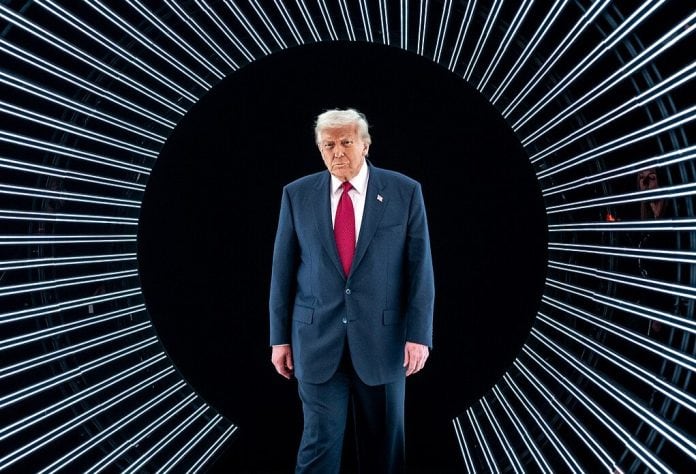
The 47th president governs through calculated unpredictability—a strategy as old as statecraft itself.
Donald Trump has returned to the Oval Office. A familiar chorus has resumed from critics has resumed such as democracy is dying, alliances are crumbling, and American values lie in tatters. His critics speak in apocalyptic registers, while his supporters herald a revolutionary restoration. Both camps may be missing the more prosaic reality, the 47th president is practicing statecraft like leaders and diplomats of the past, one that scholars of power have documented for centuries, executed with a distinctly American flair for showmanship.
To understand Trump’s methodology, one must first dispense with the assumption that chaos is his enemy. It is his instrument. As he declared during his 2016 campaign in a phrase that became emblematic of his rhetorical style he intends to “win bigly” (or “win big league,” as he later clarified, though the former stuck in popular consciousness). Winning, in his framework, requires keeping every player at the table perpetually off-balance.
The Method in the Madness
Political theorists have long recognized strategic disorder as a tool of governance. In “The Dictator’s Handbook,” Bruce Bueno de Mesquita and Alastair Smith analyze how leaders maintain power by manipulating coalitions and keeping supporters uncertain about their standing. While the authors focus primarily on coalition dynamics, their framework illuminates how unpredictability can serve leaders: when allies cannot be certain of their position, they work harder to demonstrate loyalty; when adversaries cannot predict responses, they reveal preferences through their preparations.
Masha Gessen, in “The Future Is History,” examines how Putin’s Russia employs what political theorist Vladislav Surkov called nonlinear warfare, a strategy of cultivating confusion so pervasive that citizens eventually surrender analytical rigor for resigned disengagement. Though Gessen’s book focuses on Russia, the mechanisms she identifies including exhaustion through cognitive overload, the transformation of the leader into the sole fixed point in a spinning world resonate beyond Moscow’s borders.
Other scholars such as Ruth Ben-Ghiat’s in their “Strongmen” traces patterns across authoritarian and authoritarian-adjacent leaders from Mussolini through Berlusconi to the present. She documents how such leaders often combine transgression with victimhood, chaos with promises of order. Ben-Ghiat is explicitly critical of Trump, placing him within her taxonomy of strongmen. Yet even skeptical readers can extract analytical value from her pattern recognition, separating her normative judgments from her descriptive observations.
Perhaps the most striking historical parallel and one that requires immediate and emphatic qualification is Mao Zedong’s explicit embrace of chaos as political methodology. Let me be unambiguous. Trump is not a mass murderer. He has not perpetrated genocide. He bears no responsibility for anything remotely approaching the 45 to 55 million deaths caused by Mao’s Great Leap Forward famine or the estimated 1 to 2 million killed during the Cultural Revolution. The comparison offered here is purely methodological and tactical, not moral or consequential. To conflate Trump’s disruptions with Mao’s atrocities would be precisely the kind of hysterical overreach this essay critiques.
That qualification firmly established, Mao’s theoretical writings on chaos illuminate a strategic tradition that transcends ideology. “Everything under heaven is in utter chaos,” Mao famously declared. “The situation is excellent.” For Mao, disorder was not a problem to be solved but a condition to be exploited. His concept of “continuous revolution” held that stability bred complacency and that periodic upheaval what he termed “great disorder under heaven” which served to reveal hidden enemies, test loyalties, and prevent the ossification of power structures.
During the Cultural Revolution, Mao deliberately unleashed forces he could not fully control, empowering Red Guards to attack party officials, intellectuals, and anyone deemed insufficiently revolutionary. The chaos served multiple purposes: it destroyed potential rivals, it forced fence-sitters to declare allegiances, and it made Mao himself the indispensable arbiter of order amid the storm he had created. As sinologist Roderick MacFarquhar documented in “Mao’s Last Revolution,” the Chairman understood that controlled chaos could be more useful than stable governance for a leader seeking to maintain dominance over a vast bureaucracy.
Trump’s chaos operates within democratic constraints that Mao would have found laughable, constrained by courts, Congress, federalism, a free press, and quadrennial elections. The outcomes differ by orders of magnitude, Twitter storms versus struggle sessions, tariff threats versus forced relocations, media criticism versus execution. Yet the underlying logic shares a common ancestor. For Trump, disorder reveals, disorder tests, disorder keeps the leader at the center while all others scramble for footing.
Trump appears to have internalized these dynamics through a distinctly American lineage. His mentor Roy Cohn, the infamous attorney who served Senator Joseph McCarthy before becoming a fixture of New York’s ruthless real-estate scene, taught a young Trump that attack constitutes the best defense, that admitting nothing and denying everything keeps opponents perpetually scrambling. Cohn represented Trump from the 1970s until his death in 1986, instilling lessons that clearly endured. These are not the mantras of ideologues but of tacticians.
Robert Greene’s “The 48 Laws of Power” is a text that circulates widely in business, entertainment, and political circles. It articulates the Cohn’s philosophy explicitly. Law 17 counsels: “Keep others in suspended terror: cultivate an air of unpredictability.” Law 3 advises: “Conceal your intentions.” Law 15 instructs: “Crush your enemy totally.” Greene draws his examples from Machiavelli, Louis XIV, Bismarck, and indeed Mao. These historical
figures understood that statecraft rewards those who refuse to be predictable. Whether Trump has read Greene or simply intuited these principles through decades of tabloid combat and real-estate negotiation, his methods align remarkably with the text’s prescriptions.
The Derangement Mirror
Trump’s methodology has produced an unexpected byproduct, a substantial population exhibiting what partisans have termed “Trump Derangement Syndrome.” The phrase is not a clinical diagnosis. No psychiatrist will find it in the DSM-5. It is a polemical label, coined by Trump supporters (not the author) to describe critics so consumed by opposition that they lose perspective on both historical context and present reality, perceiving Trump as an existential threat comparable to Hitler or Stalin. The term is admittedly partisan in origin. But the phenomenon it describes the tendency to view Trump as uniquely malevolent, unprecedented in American history, a singular departure from democratic norms merits examination regardless of what we call it.
Consider the rhetoric. Trump’s opponents describe an America uniquely fallen from grace, a nation that has abandoned human rights, betrayed gender equality, and shattered international cooperation. The picture painted is of singular catastrophe, unprecedented departure from American values.
Yet this framing requires collective amnesia of considerable proportions.
President Obama, recipient of the Nobel Peace Prize, authorized drone strikes that killed hundreds if not more in Pakistan, Yemen, and Somalia. The Bureau of Investigative Journalism, which has tracked these strikes since 2010, documented between 384 and 807 civilians killed in Pakistan alone during the Obama years, with total deaths from all strikes numbering in the thousands. Among the dead was Anwar al-Awlaki, an American citizen executed without trial in Yemen in September 2011. His sixteen-year-old son, Abdulrahman, also an American citizen, died in a separate strike two weeks later. No court reviewed these killings. No judge issued warrants. The Obama administration argued that executive authority in matters of national security superseded judicial process, a position that, had Trump articulated it, would have generated accusations of incipient fascism.
President George W. Bush launched an invasion of Iraq based on intelligence about weapons of mass destruction that subsequent investigations revealed as fundamentally flawed. The Iraq Body Count project has documented between 185,000 and 208,000 civilian deaths from violence in Iraq between 2003 and 2023, while other methodologies such as the Lancet surveys suggested far higher figures, over 600,000 excess deaths by 2006 alone. The torture program at Abu Ghraib and CIA black sites scattered across the globe proceeded under legal cover provided by Justice Department memoranda in the infamous “torture memos” authored by John Yoo and Jay Bybee that blessed techniques long prohibited under international law.
President Clinton ordered cruise missile strikes on the al-Shifa pharmaceutical factory in Khartoum, Sudan, in August 1998. The strike, launched in retaliation for embassy bombings in Kenya and Tanzania, killed at least one night watchman and destroyed a facility that the Clinton administration claimed was producing chemical weapons precursors. Subsequent investigations found no evidence of such production. The plant had manufactured an estimated 50 percent of Sudan’s pharmaceutical supplies. Werner Daum, Germany’s ambassador to Sudan, later estimated that the destruction of the facility contributed to tens of thousands of deaths from malaria, tuberculosis, and other treatable diseases though this figure remains contested. Clinton also launched strikes on Baghdad in 1993 and on Afghanistan in 1998, each time bypassing congressional authorization.
President Biden continued drone warfare, ordering a strike in Kabul in July 2022 that killed al-Qaeda leader Ayman al-Zawahiri. Biden’s chaotic withdrawal from Afghanistan in August 2021 left thirteen American service members dead in the Abbey Gate bombing and delivered a nation to Taliban governance, reversing two decades of stated policy on women’s rights and girls’ education. The withdrawal’s execution was condemned across the political spectrum, yet it has largely faded from discourse among those who describe Trump as uniquely dangerous.
The Indonesian occupation of East Timor, which killed an estimated 100,000 to 180,000 people between 1975 and 1999, received support from multiple American administrations. The invasion itself occurred in December 1975 with tacit approval from President Ford and Secretary of State Kissinger. President Carter continued military aid to the Suharto regime despite mounting evidence of atrocities, as did Presidents Reagan, Bush, and Clinton. The complicity was bipartisan and multigenerational. This should be a reminder that American foreign policy has never been as value-driven as its rhetoric suggests.
This history does not excuse any misconduct by Trump. But it does suggest that American presidents have always wielded lethal power with minimal accountability. American foreign policy has always mixed idealism with brutality, rhetoric with realpolitik. Those who describe the current moment as uniquely fallen reveal less about Trump than about their own selective historical memory.
The Transactional Tradition
Trump’s critics frequently condemn his transactional approach to diplomacy. For example,
his apparent willingness to treat alliances as protection rackets, his reduction of complex relationships to crude exchanges of value. Yet transactional diplomacy boasts an illustrious lineage, one that includes figures celebrated in diplomatic history.
Cardinal Richelieu, the architect of modern French foreign policy during the Thirty Years’ War, built alliances based purely on interest rather than religion or sentiment. A Catholic cardinal and chief minister to Louis XIII, he allied France with Protestant powers, the Dutch Republic, Sweden, and various German princes against the Catholic Habsburg dynasty because strategic advantage demanded it. His doctrine of raison d’état subordinated every consideration, including religious solidarity, to French power. Richelieu is not remembered as a cynical dealmaker but as a founding genius of modern statecraft.
Otto von Bismarck unified Germany through a breathtaking sequence of calculated wars and shifting alliances. He allied with Austria against Denmark in 1864, then engineered a war against Austria in 1866, then formed the Dual Alliance with Austria-Hungary in 1879. He described politics as “the art of the possible” and practiced diplomacy as pure transaction. His system of alliances was so personalized, so dependent on his unique capacity for manipulation, that it collapsed within decades of his departure. This should be a cautionary tale about the sustainability of chaos-dependent leadership.
In China, the diplomatic opening to America in the early 1970s represented transactionalism of the highest order on both sides. Zhou Enlai and Mao Zedong sought leverage against the Soviet Union; Nixon and Kissinger sought the same, plus an exit strategy from Vietnam. The Shanghai Communiqué of 1972 was an exercise in creative ambiguity, with each side stating its positions on Taiwan without resolution, deferring conflict in exchange for immediate strategic benefit. Principle yielded entirely to interest and the arrangement endured for decades.
Japan’s Meiji-era leaders pursued purely transactional modernization after 1868, adopting Western military techniques, industrial methods, and even constitutional forms while preserving what they deemed essential Japanese characteristics. They allied with Britain in the Anglo-Japanese Alliance of 1902 because Britain served Japanese interests in containing Russia. They joined the Allies in World War I largely to seize German colonial possessions in China and the Pacific. Sentiment played no role; calculation determined everything.
Charles de Gaulle withdrew France from NATO’s integrated military command in 1966, cultivated strategic independence from Washington, and pursued French grandeur through studied unpredictability. He recognized Communist China in 1964, fifteen years before the United States did, and visited the Soviet Union while lecturing Washington about Cold War rigidity. His diplomacy was pure transaction dressed in nationalist theater and France’s influence often exceeded what its material power warranted precisely because de Gaulle was difficult to predict.
Trump, then, is not practicing a novel form of statecraft. He is practicing something that many leaders have engaged in with reduced diplomatic lubrication and increased social media amplification. The substance differs less from his predecessors than the style.
The Limits of Chaos
Intellectual honesty requires acknowledging that strategic chaos can fail. Mao’s Cultural Revolution ultimately weakened China, destroying human capital and institutional capacity that took decades to rebuild. Bismarck’s successor, Kaiser Wilhelm II, attempted unpredictability without Bismarck’s skill and blundered into World War I. Leaders who cannot control the chaos they create often become its victims. (This may be a lesson for any future President J.D. Vance or other)
Trump’s approach carries similar risks. Allies whipsawed by tariff threats may eventually conclude that American commitments are worthless and seek alternative arrangements. Adversaries unable to predict American responses may miscalculate, triggering conflicts that neither side intended. The leader who keeps everyone off-balance may eventually find himself without reliable partners when genuine crises emerge.
Whether Trump’s chaos proves strategically productive or ultimately self-defeating remains an open question. The methodology has historical precedent; so do its failures.
A Guide for Middle Powers and Adversaries
How, then, should America’s friends and rivals navigate the Trump tune?
For Japan and Canada, the lesson is that reliability cannot be assumed. Trump views alliances through burden-sharing lenses and responds to visible concessions, theatrical demonstrations of respect, and tangible wins he can announce. The late Prime Minister Abe Shinzo understood this instinctively, rushing to Trump Tower in November 2016 bearing a Honma golf driver worth several thousand dollars and an attitude of studied deference. Abe’s strategy of flattery, frequent summits, visible accommodation purchased Japan considerable influence over the first Trump administration’s Indo-Pacific policies. Canada’s Trudeau initially attempted principled resistance and suffered tariff threats accordingly. Middle powers must decide whether their dignity survives accommodation and whether accommodation actually purchases security or merely defers confrontation to less favorable moments.
For the European Union, Trump represents a clarifying stress test. European strategic autonomy has been discussed for decades, from the Saint-Malo Declaration of 1998 through countless white papers and summits. Trump may finally compel its realization. The lesson from Greene’s laws is that those who appear weak invite exploitation; those who demonstrate capability command respect. Europe must develop defense capabilities and demonstrate resolve, not through rhetoric but through spending, energy diversification, and diplomatic initiatives that proceed without American permission. Trump respects strength. Pleading for restored reliability will accomplish nothing.
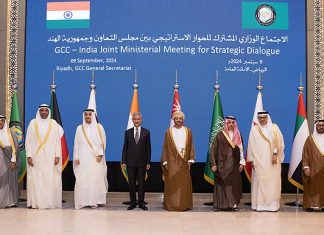
For quasi-allies like India, Vietnam, and Indonesia, Trump’s transactionalism may actually prove liberating. These nations have long balanced between great powers, extracting benefits from competition without full commitment to either side. The Cold War-era terminology for this was “non-alignment”; today’s version involves hedging between Washington and Beijing while maximizing autonomy. Trump’s explicit embrace of transactional logic legitimizes their strategies. They should engage him as what he is, a dealmaker seeking visible wins while diversifying partnerships and avoiding excessive dependence on American constancy. India’s Modi, Vietnam’s leadership, and Indonesia’s Prabowo administration all possess the strategic cultures to navigate this environment effectively.
For adversaries like Russia and China, Trump presents complex calculations. His unpredictability genuinely complicates their planning, as no model reliably predicts his responses. This carries risks for them: provocation might trigger disproportionate response, or it might trigger none at all. Yet Trump’s transactional nature suggests that arrangements may be purchased, that interests may align on specific issues even as competition continues on others. Putin and Xi must decide whether Trump’s chaos serves their interests by weakening American alliances or threatens their interests by removing predictable guardrails from a still-formidable power. The answer likely varies by issue and moment which is precisely Trump’s intent.
They also need to be prudent in that American politics and society is accustomed to chaos, instability and social friction whereas the reverse is true for China and Russia.
The Tune That Demands Attention
The Pied Piper of legend led children away through irresistible music. Trump’s tune is hardly melodious. In fact, I would argue many would say it grates, it disrupts, it offends cultivated sensibilities. But it compels attention. Friends and foes alike find themselves dancing to rhythms he sets, responding to provocations he launches, and organizing their own strategies around his unpredictability.
This may not be mastery. It may be merely chaos that happens to serve its author’s purposes in the short term while generating costs that compound over time. History will render judgment on whether Trump’s statecraft produces durable achievements or merely disruption that successors must repair.
What seems increasingly clear is that understanding Trump requires setting aside both hagiography and hysteria. He is neither the singular threat his critics proclaim nor the unprecedented savior his supporters celebrate. He is an American president wielding American power through methods that power-wielders have employed for millennia with less diplomatic veneer, more theatrical flair, and in an information environment that makes every gesture instantly global.
The appropriate response, for citizens and foreign capitals alike, is neither panic nor genuflection. It is the cold-eyed assessment that serious analysts have always applied to serious leaders: What does he want? What will he do to get it? What leverage do we possess to shape his calculations? And what are the limits of the chaos he can productively sustain?
Trump’s chaos is not random. It is curated. Those who recognize the curation may find opportunities within the confusion. Those who merely rail against the disorder will find themselves, like the children of Hamelin, following a tune they never chose to hear, toward destinations they never chose to reach.
The middle powers and quasi-allies who thrive in this environment will be those who learn the melody without surrendering to it. Those who understand that Trump’s unpredictability is itself predictable, and who prepare accordingly. The adversaries who prosper will be those who exploit the chaos without triggering the overwhelming response that American power, even chaotically wielded, can still deliver.
And the Americans who navigate their own politics most wisely will be those who neither dismiss Trump as aberration nor accept him as salvation, but who see him as the latest chapter in a long history of flawed leaders wielding immense power. It is a history that includes brilliance and brutality, idealism and cynicism, and very little of the purity that partisans on either side prefer to imagine.
The Context That Matters: Why Historical Parallels Have Limits
Acknowledging Trump’s methodological continuities with past leaders should not obscure critical contextual differences that affect outcomes. Richelieu and Bismarck operated in autocratic systems where leaders faced minimal domestic accountability. There was no free press scrutinized their daily decisions, no opposition parties could investigate their actions, and no four-year electoral cycles threatened their tenure. Trump, by contrast, governs within democratic constraints that have demonstrably limited his ambitions. Federal courts blocked his early travel bans, Congress refused funding for his border wall, and the 2020 election removed him from office despite his resistance. These institutional guardrails, however strained (if not deeply stained), function differently than the ceremonial constraints faced by 17th-century cardinals or 19th-century chancellors.
Moreover, Mao’s chaos occurred in an information-controlled environment where the state monopolized narrative. Trump’s chaos unfolds in real-time across global media where allies, adversaries, and financial markets react instantly. When Bismarck betrayed an ally, months might pass before consequences materialized. When Trump threatens tariffs via tweet, markets drop within hours and allied governments must respond immediately. This compression of action-reaction cycles creates instabilities that 19th-century statecraft never confronted.
Finally, the consequences differ in scale and reversibility. Richelieu’s transactional Protestantism did not undermine Catholicism itself; Trump’s transactional approach to NATO Article 5 commitments potentially delegitimizes the entire collective security architecture. Bismarck’s system collapsed after his departure, but it didn’t trigger global war during his tenure. Whether Trump’s chaos remains contained during his presidency or creates cascading failures beyond it remains the critical unanswered question that historical parallels cannot resolve.