

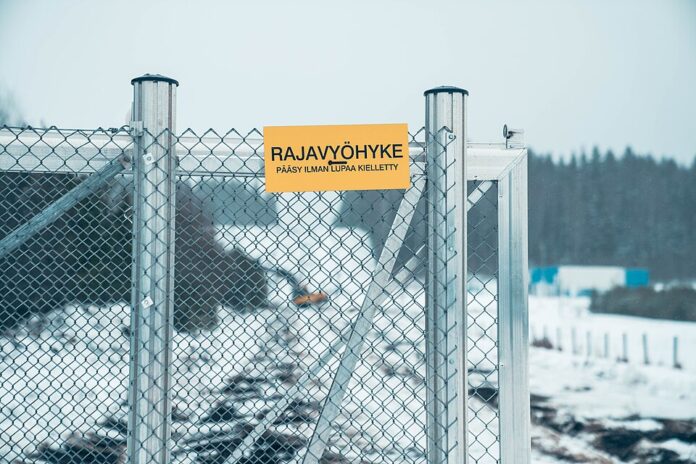
Europe and Russia spent years building trade ties and political forums, even as they disagreed about democracy and the future of their shared neighbourhood. The choices made during that period still shape how both sides understand the collapse of a relationship once presented as a pragmatic partnership.
Russia’s war in Ukraine has reshaped Europe’s security order, but the question of what follows remains unresolved. Moscow’s ability to sustain the fighting, its ambitions in the former Soviet space and its growing dependence on China all complicate the prospect of a lasting settlement.
Arkady Moshes is programme director for Russia, Eastern Europe and Eurasia at the Finnish Institute of International Affairs. Before moving to Finland in 2002, he worked at the Russian Academy of Sciences’ Institute of Europe in Moscow. He holds a PhD in the history of international relations, and his research focuses on Russian foreign policy, Russia’s relations with Europe, and the politics of Ukraine and Belarus.
In this interview with Geopolitika, Moshes reflects on his decision to leave Russia and explains why he sees imperial thinking as central to its confrontation with the West. He discusses repression under Putin, Russia’s capacity to continue the war, the consequences a Russian victory could have for neighbouring states and Moscow’s increasingly unequal relationship with Beijing. He also considers why even a change of leadership in Russia might bring no quick reconciliation with Europe.
May I ask what kind of background you have?
I have a dual identity, Russian and secular Jewish. I was born and grew up in a town some 50 kilometers south of Moscow. I lived in three places around Moscow, but I do not consider myself a Moscowite, because that’s a bit of a tricky thing. Moscow was the exhibition of socialism, especially as concerns the availability of food products and some services; everywhere else was not.
So, I’m closer to the countryside than to Moscow. My mother iwa from the upper Volga region, the historical core of Russia. My father was born in Odessa just before the Second World War, and then his family was evacuated. So, I’m half Jewish and half Russian. I have always been open to and interested in both cultures, although my native language is Russian and my cultural (not religious) background is more Russian. I would even say – Orthodox Russian.
I studied general history at Moscow State University. I actually specialized in British history, and my dissertation was essentially about Margaret Thatcher’s defense policy throughout her time in office. The times were dynamic, not to say dramatic. Conservative government pursued a plan of nuclear rearmament, while the the Labour Party’s opposed it. Conventional weapons were also dealt with, as well as Britain’s approaches to arms control negotiations. Despite the title of the study, which emphasized arms control, the work was actually about defense policy.
By the moment when the Soviet Union collapsed, I had already had some exposure to Ukraine, and societal structure and the the language. I could already manage to speak in Ukrainian, although not fluently and making a lot of mistakes, and that developed further over the years. So when the Soviet Union disintegrated, I changed my specialization from Britain to the post-Soviet space. That’s the field where I stayed throughout my career. I’ve done some work on the Baltic states, but mostly my work has been, on and off, about Ukraine, Belarus, and Russian-European relations.
Since you ended up living in Finland, I’m guessing you’re more pro-Western in your outlook, or more inclined toward Western philosophy than, let’s say, Russian imperial thinking?
I worked at the Russian Academy of Sciences for 14 years, but when Putin came to power, I started thinking that it was time to leave. I clearly gained from the changes of 1991 because of the freedoms. I’m a liberal person, but before 1991 or 1992, I had no chance even to travel abroad because of my Jewish descent.
It was clear that I gained access to some fields of work and some assignments only thanks to the revolution. That includes analyzing Ukraine, which would have been impossible had the Soviet Union remained intact. With Putin’s arrival to power, I sensed very quickly that the situation began to change. My job application in Finland in 2002 was also connected to the institution: I had been a guest scholar there, in FIIA, in 1998 and liked the atmosphere a lot.
So, I moved to Helsinki in 2002, but at that point I wasn’t thinking it would be permanent. I remember very well the day when everything became clear. That was the day Mikhail Khodorkovsky was arrested – i.e. 25 October 2003. Since then I’ve had no doubts as to the direction Russia was moving. I decided I’d better stay here in Finland and continue doing my research the way I had been doing it, without having to adjust it to the political course that I could not agree with.
Were are you treated as something of a traitor by the Kremlin establishment because of this decision and your political views?
That would be too much to say. Probably not. I was a mid-career researcher, and I didn’t expect the Kremlin to be particularly attentive to me. So, honestly, I do not know. But my relationships with former colleagues in Russia were quite normal. Presumably, with some of them, they would still be normal, but I don’t see these colleagues anymore because I don’t travel to Russia and they have little opportunities to travel to Europe.
At the moment, the laws are such that traveling to Russia could be a one-way trip for me. I work at a foreign-policy institution in a NATO country, which in itself could be qualified as a crime in today’s Russia. A lot of things I’ve said or written in my life are not to authorities’ liking. But until fairly recently—even after Crimea—it was still possible to do certain things in discussion formats including Russian scholars.
I was a member of several such networks, and we had regular meetings. I think that still made sense. But when the Russia’s war against Ukraine broke out in 2022, those opportunities closed. My last trip to Moscow was in 2021.
I guess you are part of the liberal-leaning part of the Russian population. How many people do you think have a similar world-view as yourself?
It’s a good question. I would say that probably about 20 to 25 percent of the population prefer Europe and liberalism. You could see it in different polls, especially before the war started in 2022. Those are the people who would be willing to move closer to Europe. And it’s roughly the same 25 percent who say they’re against the war.
So, it’s 20 to 25 percent, and how much bearin does this have on the Kremlin’s decisions? Probably very little, because these people will not opt for street protests against Kreml’s policies. At the moment, the repression is awful. I’ll give you one example: last week, one person received 14 years of prison for taking pictures of a military cemetery.
This is moving in the direction of Stalinism. It has nothing to do with the level of repression under Brezhnev,_let alone the last years of the Soviet Union. An email to China, for instance—not even to the West—can get you 20 years in prison if it is treated as high treason. The repression is absolutely terrible, unseen since Stalin’s days.
The “positive” distinction isthat the repressions are still selective and you still have to do something to be repressed. But people who are opposition-minded have to hide it. Every Friday evening, the Ministry of Justice publishes new names of people designated as foreign agents.
And “foreign agent” is basically the equivalent of “enemy of the people” before. The Kremlin feels safe at the moment because of this level of repression, but not only because of that. It can perhaps buy the support of some sections of the population, and many people have passive and rather fatalistic attitudes. It can still make and implement whatever decisions it wants, at least for the moment. Opposition is not likely to stop it.
So you’re saying 20 to 25 percent are more or less liberal and would like more amicable relations with the West, Europe in particular?
Maybe Europe. It’s a long story. There have been periods—for instance, during the World Cup in 2018—when it took only a couple of months of turning off the anti-Western propaganda for people to start seeing the West more positively.
So, I would say the 20 to 25 percent are people who think it would be better for Russia not to be in conflict with the West, but to have normal, pragmatic working relations with it. That said, this is not necessarily the same as sharing liberal values.
About half the population is basically ready to follow the government, whatever the government does. Another quarter, roughly, are people who are, I would say, even more bellicose than the government. They push the government toward a deeper conflict with the West.
People like Igor Girkin?
Yes. If we need a name, you can mention Igor Girkin. It’s no accident that he’s in prison, right? The authorities didn’t want him criticizing the government from the “activist” side. There are other people as well. Even before the war, key figures in Russian ethnic nationalism were prosecuted and imprisoned.
But perhaps we should look for other names. There’s a whole group of pro-war bloggers who criticize the government for doing too little. It’s those people.
Where does Alexander Dugin fit into that picture?
I’d say he is slightly more pro-war than the government. But Dugin is a name more people follow in the West. He’s a prolific writer. He was there before Putin, so people know him. But we should not think that Dugin defines policy.
Dugin explains policy. Dugin comments on policy. But he doesn’t define it. He has good publicity. He’s noticeable. He’s visible. But he’s not as influential as some people think.
As far as I’ve understood, Putin’s favorite tsar is Peter the Great, who made great efforts to westernize the country, as went on trips across Europe to learn from it. And it seemed that Putin, at one point, wanted some kind of civilizational bond or alliance with the West or Europe. There was the proposal for a common space from Lisbon to Vladivostok. What happened to that Putin? Or did he even exist?
You’re not completely wrong. But one part of the answer is how he saw Russia’s relationship with the West. At the beginning, when he was considering those things, he thought Russia would be equal to the United States. If Russia joined the West, it would have to join on terms that guaranteed it a dominant status—equal to the United States. When that proved impossible, it was a factor that made him rethink things.
This was going on both before and after. I would say that NATO enlargement, or several rounds of it, showed to him that Russia really had no veto. That was a very big blow to his view. To be more precise, his idea of being together with the West without sharing Western values had several components, or preconditions.
One was that the West would not intervene in Russian domestic affairs. In foreign policy, Russia could be part of a concert of powers—something like the Congress of Vienna in 1815 where the big countries come together and decide the fate of smaller countries. That was his idea. But the West would also have to guarantee that it would not intervene in Russia’s domestic affairs.
That part he got. My view is that it finally happened in 2006, when the West decided to pursue interests rather than values in its relations with Russia: money, energy, profits. Basically, the West sold out Russia’s future as a democracy. I have a very firm opinion on this issue.
Was there a particular episode that makes you say this, or was it a broader shift that happened over time?
The discussion went on between 2004 and 2006, especially in the European Union. I remember all those papers very well: the Council paper, the Commission paper, the European Parliament paper. The European Parliament was obviously more critical. It’s easy to understand why the discussion started in 2004: there was the first Ukrainian Maidan, which Russia lost.
Western governments then asked themselves whether they could really deal with Russia the way they had before. In 2003, they had signed all those papers about the four common spaces with Russia. Summits between the EU and Russia were taking place twice a year. A whole structure had been built around the relationship. But they asked themselves whether they were moving in the right direction. That discussion went on for two years, until 2006.
So, I don’t think there was one decision that caused the shift, although formal decisions were made. Informally, the West decided it was better to get economic benefits from Russia than to pursue its values. So Putin wanted, first, noninterference by the West in Russian domestic affairs.
Second, he wanted what the French call a droit de regard: basically, an exclusive sphere of influence in the post-Soviet space. Minus the Baltic states, because they were already part of NATO. He didn’t like it, but he could live with it. Ukraine, Belarus, and the Caucasus were different, and Central Asia to a lesser extent, because it was less of a European domain. That was more of a China issue. But the European part of the post-Soviet space had to be conceded to him. This is what the West was hesitant to do and I would say the result was a draw.
On the one hand, we had the NATO summit in Bucharest, which made it clear that Ukraine and Georgia would have no chance of joining NATO anytime soon. That was a victory for Russia. On the other hand, other things were going on, particularly in Ukraine, that made it impossible for the West to concede that sphere of influence completely.
So, he didn’t get what he wanted. He was thinking about noninterference in domestic affairs, an exclusive sphere of influence in the post-Soviet space, and a kind of veto in European security matters. That last demand kept coming back, all the way up to November 2021, when the Russian ultimatum appeared.
When Putin did not get all those things together and could not reach a broader arrangement with Europe that satisfied him, he started to change. As I said, a key point for him was 2004 and the first Ukrainian Maidan. After that, he said the collapse of the Soviet Union was the biggest geopolitical catastrophe of the 20th century.
There was also his Beslan speech, also in 2004, which happened earlier and these things have to be taken together. In the Beslan speech, he suggested that Islamist terrorism was a weapon in the hands of Russia’s more traditional enemies, who wanted to take “juicy morsels” out of Russia.
I call it the “juicy morsels” speech. That was when he clearly said he saw the West as a problem. Then there was the Munich speech and the Bucharest NATO summit. He went to Bucharest personally, trying to convince the Germans, who then vetoed Ukraine’s and Georgia’s path into NATO.
After Beslan, Munich, and Bucharest, it was very clear to me that sooner or later Russia and Europe would be in conflict. I did not foresee the intensity of the conflict we have now, but I did foresee that the relationship would not be a pragmatic partnership and would lead to a very big conflict.
Are you sympathetic, then, to the argument that NATO enlargement caused Russia’s aggression? I don’t mean that NATO was a military threat to Russia. But could enlargement have challenged Putin’s belief that Russia had a right to rule its periphery—some form of civilizational chauvinism or Eurasianism?
Imperialism is the word. Not even ethnic chauvinism, but classical Russian imperialism and thinking in terms of spheres of influence. That would have existed without NATO enlargement as well.
So you think it would have happened even without NATO enlargement?
Yes. Look, the enlargement to the Baltic states took place in 2004 and was decided in 2002. Putin could not stop it. He didn’t like it, but he didn’t make it an enormous issue. He knew the West was not going to bring Ukraine into NATO. He knew the West was not going to bring Georgia into NATO.
He knew there was no new security threat coming even from a potential enlargement. Why? For instance, the distance to Moscow from southern Latvia is about the same as from Kharkiv—a little over 600 kilometers. So, between 2002 and 2022, nothing threatening happened on the Russian border.
There was no aggressive or threatening development from Russia’s point of view.
And the distance from the Estonian-Russian border to St. Petersburg is less than 200 kilometers. For 20 years, that border was not problematic at all. Nor was the Finnish border. Finland was a nonaligned country, not neutral. It was not going to join NATO until the ultimatum of 2021, when public opinion changed completely within three months.
Putin could not have seen enlargement as an immediate military threat. But for him, NATO enlargement that he could not block was evidence that the West would not give Russia the status he thought it needed. It was thus the inability to block enlargement was a problem for him, rather than an actual security threat itself. Being a good politician and knowing the country well, he knew what his propaganda system could do.
His propaganda system slowly but surely created a very distorted picture of reality that most Russians accepted. There was a period when people said television could carry the government’s message, but the internet would tell them what was really happening. That did not last. In the end, the government dominated not only television and print media, but much of the internet as well. Those who want other information have VPNs and can find other sources. But for most people, that is still unfamiliar territory.
To make a long story short, it was not an objective increase in security threats from enlargement. It was the interpretation of enlargement as a security threat, coupled with imperialist sentiment in the country, that pushed Russia in the direction it took.
Let’s talk about the war in Ukraine: Sometimes I feel there’s a stalemate, sometimes I feel Ukraine has the upper hand and sometimes I feel that Russia is winning What do you make of the situation?
First of all, I think your feeling is quite correct. We can go into detail, but in what sense? Every time Russia makes a big strategic blunder—as it did in 2022—or every time Ukraine gets new types of weapons, mostly Western ones, and starts having some success on the battlefield, the West jumps to the wishful conclusion that Ukraine has effectively won the war.
Then, three or six months later, Russia finds ways to react. We can go through the types of weapons. First there were the M777 howitzers. Then there were the tactical missiles ATACMS. Now it’s drones and successes in aerial warfare.
But six months later, Russia responds. Sometimes it seizes the initiative. Sometimes it does not. Sometimes it looks like a draw, and so on. But Western media are especially quick to get and amplify the impression that Ukraine is about to win. That Russians will understand the war is stupid and that there has to be a ceasefire of some sort.
That is not the case. Why? Because from theory we know there are only two ways wars end. One is the capitulation of one side. The other is a draw. Take the Iran-Iraq War, from 1980 to 1988: millions of people died, and in the end neither side won. It was a draw. Both sides had to become exhausted after a long war of attrition.
We have neither of those outcomes at the moment. Neither side has been exhausted. Russia has its economy and defense industry. Ukraine gets support. So neither side can win, but neither one is ready to suggest that a draw thould be a mutually acceptable outcome. The war continues. How long it will continue, and at what intensity, is difficult to say.
Just to simplify things for the readers, we could look at three scenarios and what they might mean for the relations between Russian and the West afterward. Let’s say a total Russian victory, a stalemate, and a total Ukrainian victory—just to make it easy, although I know that simplifies things too much. How do you see the situation on the ground right now?
Yes, but these scenarios are very simplified. In reality, I don’t think any of them is likely at present. What do we mean by a Ukrainian victory? People like to say that by not losing the war, by keeping its statehood, Ukraine will already have won. Fine, but not in military terms. Ukraine and the West cannot win in the sense of occupying Russia. We are not expecting a Ukrainian flag ever to be raised over the Kremlin. Nor are we expecting Russia to go through a process like Germany did after the Second World War. Russia is too big for that.
Can we think of another scenario? Potentially, yes. Suppose the West stops helping Ukraine—which is a big if, and I don’t think it will happen in the foreseeable future. Or imagine an agreement that satisfies Russia but also keeps Ukraine satisfied because it keeps its state, receives security guarantees, and receives funds to recover from the economic damage.
In principle, this is possible. But it would not be the end of the story, because sooner or later Russia would feel strong enough again to restart the war. So, if Russia gained only some territory while Ukraine kept its army and Western security guarantees, Putin would not be happy with that.
And I cannot imagine how a draw—a durable ceasefire—could be put into practice. I’ve followed this war more or less day by day since 2014. Even when it was Ukraine fighting the breakaway entities, not a single ceasefire lasted longer than several days. There were many attempts: ceasefires for the start of the school year, for the harvest, for Christmas. None held.
At that time, the front line was probably between 400 and 600 kilometers long. Now it is well over a thousand kilometers. I cannot foresee how everybody simply stops shooting. It’s a dead end because none of those three scenarios seems feasible to me at the moment. A ceasefire may be somewhere beyond the horizon, but I cannot yet describe exactly what it would look like—one that Russians, Ukrainians, Europeans, and Americans would all accept.
Ukraine needs security guarantees that the West is not going to provide. Russia still wants a victory, including the weakening of the Ukrainian state and the destruction of the Ukrainian army. That has been there from day one. I do not envy the diplomats traveling to Moscow and Kyiv to try to convince them to stop the war. I don’t think it will happen anytime soon.
The war could thus continue for years and years until one side is exhausted, or something changes politically in Russia, Ukraine or the West. I don’t know if it can last for ten years; then we would need to think about other factors. But economically, militarily, and psychologically, it could easily continue for years.
Who do you think has the initiative at this stage? I’ve tried to keep myself updated, but not and expert and there is a huge amount of information to make sense of. I’ve heard that Russia is losing more soldiers than it can replace. Is that wishful thinking in the West?
Well, we spoke five minutes ago about how it changes. It’s like a current and it alternates. I can give you figures.
Some in the West say Russia is losing more people than it can recruit. Last year, Russia recruited 450,000 contract soldiers. Volunteers or not—I’ll explain that in a second. This year, the plan is 409,000. In the first half of the year, it recruited over 200,000. So, it is on schedule.
Is it cheap? No. And the money is spent in a strange way. A person gets a signing bonus of several million rubles. I don’t remember how much that was in euros when I last checked. It’s a huge signing bonus. Then, if he is killed, his family receives a large payment as well. The salary is small by comparison.
So, the state pays a great deal when someone signs up, and then a great deal when he dies, even if he has spent only days on the front line. If Russia changed the way it conducts the war and started thinking more about its soldiers—though I’m not saying that will necessarily happen now—things could look different.
Neither the imperial nor the Soviet army was known for thinking much about its men. Men were expected to die and women to give birth to more men. In that sense, Putin is unusual, because for the first time in Russian history, the army is essentially a mercenary army. It is not a citizens’ army.
People do not join because they want to fight or because they hate Ukrainians. Such people existed, but they were there in 2014, during the so-called Russian Spring. Those who wanted to volunteer because they shared its ideological premises did so then, and by now they are by and large dead.
People joining now are joining because they want money. It’s thus a mercenary army and we don’t know all the consequences of this solution. Society might suffer quite a lot at some point. It also makes it more difficult for Putin to end the war. But what I’m saying is that perhaps the number willing to enlist is going down.
At some point it will, because too many are dying. Russia could still turn to mobilization. That is an interesting question, because of course it would not be popular. It’s one thing if you think your son is going there and will get the money. It’s another if he has no choice and that might cause popular anger against the Kremlin.
But the Russian authorities learned their lesson in 2022, when a lot of people left the country. We’re talking about hundreds of thousands of Russian citizens – many of whom later returned to Russia when the risk of being mobilized had passed.
Imagine if they announced mobilization now. Many of those people might not be able to leave because much has been done to improve registration. If you tried to leave legally, border guards might already have a flag against your name. We have seen cases of people being told, “Sorry, you cannot leave Russia because you are in line to be mobilized if something happens.”
They also have fewer places to go, too. The post-Soviet states that welcomed them in 2022 are not so welcoming anymore. Many have changed their laws. Many have changed their relationships with Putin. I would say that the only country you can now flee to relatively safely is Armenia. If you are allowed to leave Russia, you can at least go to Armenia and see what you can do.
But it is much more difficult than four years ago, so where would you go?. Going to the West is even more difficult, as Western countries are not taking Russians seeking asylum. Avoiding the draft is not generally treated as grounds for political asylum. People will most likely be deported back to Russia.
Attitudes toward Russians—believe me, I know what I’m talking about – have also hardened in the West. Even in Finland. I have dual citizenship: Finnish and Russian. I know how difficult it can be for someone with dual citizenship, and therefore still some connection to Russia, to continue living normally.
If you have only a Russian passport, it is much more difficult. You may end up unable to open a bank account or buy property, or having to go through all sorts of security checks. It isn’t pleasant.
So, the post-Soviet states are not necessarily willing to accept Russians nor are Western states, and they may be unable to leave Russia. So, if the authorities declare a large mobilization, it would be unpopular, but it is feasible. Repression at home for those who disagree, and the lack of opportunities to start a new life elsewhere, leave people with very difficult choices.
Let me put it this way: Russia is far from exhausting its manpower resources. It is far from exhausting its economic resources. I’ve written about that. A country that has a federal budget deficit of 2.5 percent of GDP during a war!- Russia’s regional deficits are worse, but that is the federal figure. It is not something that will undermine Russia’s ability to fight.
Going back to what you said about Russia’s ultimate goal being to destroy Ukrainian statehood: if it succeeds, what happens to the other post-Soviet states? Let’s start with Belarus and the plans for a Union State, but also the Central Asian countries.
The Central Asian countries will keep their independence because Russia does not dominate in the region. Russia has to contend with China there, and being a rival to China is much more difficult. China has brought in a lot of money and is even beginning security cooperation. Tajikistan is an example, but not the only one.
So, those countries will stay independent. There will be rivalries but there will also be cooperation. They need Russia. I had a project involving Kazakhstan several years ago and conducted interviews there. It was clear that people had a lot of problems with Russia. But when they looked at the broader picture, they would say, “We have lived with the Russians for 600 years, and here we are with an independent state. Our brothers in Xinjiang who have lived with China do not have statehood or the same prospects for their language. They will be essentially assimilated a generation from now.”
So, they are somewhat worried about Russia, but they also welcome Moscow’s role of a balancer to China. It could be roughly be explained with the proverb “it’s better the devil you know than the devil you don’t”?
But you are right that if Russia wins the war in Ukraine, Belarus could be annexed very quickly. Moldova, Armenia, and Georgia would be at serious risk as well. Belarus might not have to be formally annexed, but it would become a zone of absolutely exclusive Russian influence, and the West would withdraw.
Because if Ukraine loses, the West will lose, too. If the West cannot help Ukraine, it certainly will not even try to help other countries that are much smaller. That seems quite clear. So, if Russia wins in Ukraine, it will re-establish its dominance in these other countries. That might not go smoothly, because Russia would be emerging from the war and would not have much money to spend there. Nevertheless, I think it can be taken for granted.
No matter how it ends, the war has taken a toll on Russia. It is weaker than it was before. If it wins in Ukraine, annexes Belarus, and gains control over Armenia and others, how do you see its relations with Europe and the West developing?
China could be considered a threat on the horizon from the Kremlin’s perspective, so wouldn’t Moscow have to balance against Beijing somehow? Wouldn’t Russia have to try to somehow re-establish relations with the West?
That view would have been correct 20 years ago. China was a threat on the horizon, and Russia had to balance against it. At the moment, Russia might still want to balance, but it cannot. It is just too late. Russia’s dependence on China is not the same as Belarus’s dependence on Russia, but it is moving in that direction.
Russia would not have been able to wage this war if China had taken a different diplomatic stance. China helps Russia economically to fight the war. China helps Russia diplomatically. China is potentially the main market for Russian fossil fuels. Its role has already become very important, and it is growing.
If you analyze the bilateral relationship in detail, you will see that Russia can still say no to some proposals from China, but it cannot negotiate on equal terms. That is what has changed. If China does not get the terms it wants, there is no deal. And this is not entirely new.
It has been developing for perhaps 15 years. For me, the 2014 gas contract is an example: China obtained unprecedented terms, to the point that nobody knew how much it would pay for the gas. Russia built this enormous infrastructure with little Chinese money. There was no Chinese money in it, really. And the price was so low that we do not actually know what it was. Now Russia is pushing for the Power of Siberia 2 pipeline, and China keeps saying no. It is waiting for Russia to offer terms that will be extraordinarily beneficial to China.
Anyway, that is a long story, but, returning to your question, Russia does not have the power to balance against China. It is too late. It was already too late ten years ago, when Macron was thinking about whether Europe might do something to draw Russia away from China.
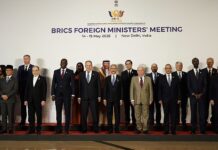
I’ll give you one example. There were a couple of summits in the past two weeks: one involving the Shanghai Cooperation Organisation and one involving BRICS. At the SCO summit, Russia continued some dialogue with Xi Jinping. But during the BRICS summit, Putin and Xi Jinping did not have a bilateral meeting.
I don’t know whether anyone in China noticed that. But in Russia, it was in all the newspapers, because they had to explain why Xi did not want to see Putin. It was not properly explained. They said the two would greet each other in the corridors. But the reason there was no meeting, in my view, was that there would be no deal on the gas pipeline. China held back.
My view on this is quite clear. I published a paper in 2011 arguing—and I was not the only one arguing this even then—that Russia would become a junior partner in its relationship with China. It is a junior partner now. It is not an equal partner to China. It is not an equal negotiator.
Indeed, the power asymmetry between the two is very significant. If China decides to, it can do terrible damage to Russia, and Russia will not be able to recover. Of course, it is better for China to keep Russia in its present subordinate position, where Beijing basically can get what it wants from Moscow.
It’s interesting that you compare China and Russia’s relationship to the relationship between Russia and Belarus, because Belarus is basically a vassal of Russia. I have never entirely accepted the argument that Russia is moving toward becoming China’s vassal, but you’re saying that is basically where the relationship is going?
As a follow-up, there was a leaked FSB document in late 2023 or early 2024 saying that Chinese intelligence services were trying to recruit Russian scientists and defense-industry employees to obtain military technology through espionage.
And with Western technology leaving the Russian market, Chinese IT-technology, including Huawei’s, has gained ground and could potentially break into Russian information systems, as I understand it. Can Russia protect itself from China? Or is it an open book that the Chinese can read?
I’m not a technical expert, but I think the concern is largely plausible. A number of people, especially at Siberian research centers, have been imprisoned in recent years because, allegedly—or at least according to the courts—they were spying for China. But you do not need to look only at sophisticated computer systems to see China’s technological position.
Look at cars. China has now taken over the Russian car market. As soon as cars stopped arriving in the numbers they had before 2022, Chinese manufacturers quickly came to dominate that market. It is probably the same with phones. It is the same with other high technologies. So yes, without Chinese technology, Russia would face enormous difficulties.
But can Russia protect its state secrets, military secrets, and military technology when it uses all this Chinese equipment?
These issues are outside my expertise, so I cannot give you an expert opinion. But I can say that the concern is quite plausible. I find it difficult to imagine how else it could be. There is one thing we should remember. For many years, Russia was very careful about its weapons exports to China because it knew about reverse engineering: the Chinese could disassemble and copy what they bought.
So for a long time, Russia generally avoided selling China its most sophisticated military technologies. That changed more than ten years ago. The Russians decided it was better to cooperate with China, perhaps to give it some technologies and get others in return, than to keep trying to prevent China from acquiring Russian technology.
Sooner or later, China might obtain it anyway, while Russia would get nothing in return. There are nuances, particularly when you bring India into the picture. But in simplified terms, I would say that China will probably learn what it wants to know.
For the last part, let’s say Russia loses, where it doesn’t succeed in destroying Ukrainian statehood. I know you’ve said that is not very plausible, but let’s imagine for the sake of argument that there is a coup against Putin and a new Russian government is established.
I’ll start by listing a number of things I think will happen regardless of whether Russia loses or wins. That is more interesting. They are somewhat independent variables, but they are not really variables anymore. They are constants—things you can predict.
The first is that there will be no repetition of the end of the Cold War. Then the sides agreed to turn the page. There was excitement about Russia coming in from the cold, about future cooperation, and about Russia no longer being the enemy. It was Fukuyama and the “end of history.” Everybody was thrilled: you no longer needed to spend so much money on the military or on weapons. That will not happen this time.
The war we are dealing with now is taking place before our eyes. It is a hot war, which is, by definition, harder to deal with and to end psychologically than the Cold War. One reason I think there will be no similar ending is Russia’s domestic situation. Whoever comes after Putin—even if that person wants to be a second Gorbachev—will immediately face the question: “Whose is Crimea?”
The West will ask it as a precondition for normalizing relations with Russia. If the new leader says Crimea is Russian, the conflict continues. If he says Crimea is Ukrainian, I’m afraid he or she will face a crisis at home, because perhaps half, or even 75 percent, of the population will disagree with him.
After all the suffering, hardship, economic damage, and deaths, people will ask why he is giving up the territory they have been fighting for. I don’t know how many months he would remain in power after that, but probably not many. So, he will have to answer that question.
Nobody will agree to put it aside for another 20, 30, or 40 years. And even at the end of the Cold War, there was a strong reluctance in Russia to accept that it had lost. I remember the discussions. People would say, “We did not lose the Cold War. We decided we were no longer interested in continuing to fight it.”
They had a point in the sense that, if North Korea could survive all those years, perhaps the Soviet Union could have done so too. But Gorbachev decided to stop the Cold War. Whatever one thinks of that argument, a government that says it wants to return to the West and give up Crimea and other territories will not last long.
On the Western side, the situation is different now, too. The Baltic states, Poland, and other Central European countries are in NATO. In 1989–91, they were not part of Western security alliances. Now they are, and they play an active role. They have an existential interest in containing this Russia. They might see a different Russia differently, but they want to contain this one. So there will be no new Gorbachev and no smooth ending of the war.
Second, it is very likely—perhaps not 100 percent certain, but close—that Western technology and investment will not return to Russia for a while. I know people in the West, especially in Finland, who lost money in Russia, had to leave, or had their assets taken. They will not be in a hurry to invest again. Perhaps they will at some point, but it will take a lot of time. So, there will be no quick return of Western technology or investment.
Nor will Europe return to its former dependence on Russian energy. That lesson was learned the hard way. A return to the German approach associated with Schröder or Merkel does not seem likely anytime soon. So, the economic side does not favor renewed cooperation.
Third, we have just been speaking about China. Russia’s dependence on China will persist. China will aim to limit cooperation between the West and Russia if it begins again.
There is also another, separate factor, which plays an important role: for the first time in its history, Russia is governed by the security services. Before, it had tsars and then the Communist Party, even during periods of repression. People do not always realize that Stalin had 23,000 security officers executed in 1937–38. That was his way of showing the security services that the party ran the country, and that he ran the party—not the security services.
Now it is the other way around. Even in Gorbachev’s time, people in the security establishment could collectively see an interest in opening the gates and gaining benefits from the West. Now they think differently. It is a different group of people. They gain more from the present arrangement. Those are the things I think we know.
Then there are things we know less about, or do not know at all: whether it will be Putin or a different regime, and the specific condition under which the war will end, and so on and so forth. What will be Russia’s relationship with the other countries of the Global South, starting with the Middle East? That is, again, something very interesting.
And we don’t know what the internal situation in Europe will be. What will be the level of Ukrainian fatigue? What will be the level of economic interest in Russia? Probably not that much, but what will the internal political situation in Europe be? How many “alternatives”. like AfD , will be in power at that moment? Maybe many. And finally, there is this wishful thinking about tearing Russia away from China.
That’s where the scenarios stop. But whenever I go through everything and try to put my thoughts in order, I come up with only two scenarios, and they’re both bad. One is the continuation of the conflict. It doesn’t have to be a war. It doesn’t have to involve drones, acts of sabotage, or intensive hybrid warfare. It doesn’t have to be that. But a new Russian leadership may still find it better for itself, domestically, to treat Russia as a besieged fortress. That was one of the things that helped Putin stay in power. Putin is not just about repression. He is about three things.
One is repression. Another is money, because he is buying loyalty. The third is narratives and propaganda. He was able to create the narrative that Russia was under attack. That it was not at war with Ukraine, but at war with the West—and that the West started it. The people who come after him will be able to exploit this narrative for a while.
So, a real continuation of the conflict is still a realistic medium-term scenario after the war ends. Longer term, I don’t know, because much will depend on many things. The other scenario is, unfortunately, the same one, but lighter.
The people who come to power will not necessarily want the conflict to continue. But they might still find it better for their position in Russia to pretend that the conflict is continuing. It might be the best scenario available at the moment: a lot would be said for domestic consumption, but that would not lead to an actual war.
Then, some years later, perhaps there would be new opportunities. But at the moment, as I said, I see a scenario of harsh, real conflict and a softer, pretend-to-be type of conflict. I would say that one of those could be the situation from the day the war ends and for five to ten years afterward.