

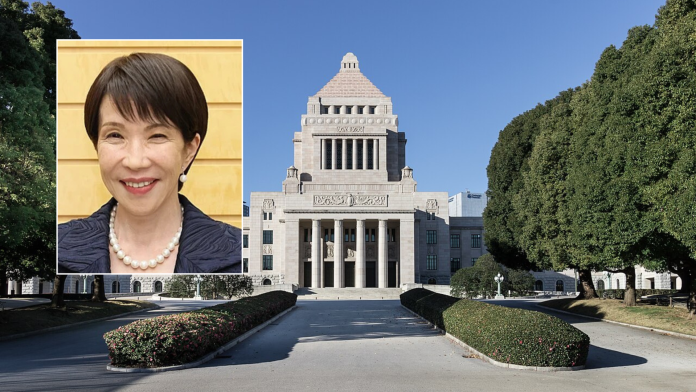
A commanding electoral mandate has reset the balance of power in Tokyo and thrust Prime Minister Takaichi to the apex of authority. What follows may shape Japan’s economic future and its role in the Indo-Pacific for years to come.
With a historic result in the snap election on February 8 – the first supermajority since 1955 – Japan’s new Prime Minister, Sanae Takaichi, has stepped onto the political stage with a mandate her predecessors could only dream about. The victory not only represents a breakthrough for the Liberal Democratic Party (LDP), but could also mark a turning point in Japanese politics.
For the first time since the party’s founding, the LDP stands with near-unfettered authority to shape both domestic and foreign policy in East Asia’s leading democracy. At the same time, the challenges are formidable. Japan’s economy continues to grapple with the aftershocks of the “lost decades,” with a struggling middle class demanding tangible policy solutions. The geopolitical landscape in the Indo-Pacific is also becoming increasingly complex, leaving Takaichi little room for delay.
To better understand what this new political mandate may entail – both domestically and on the international stage – we spoke with our own Stephen A. Nagy. As a professor of politics and international studies at International Christian University (ICU) in Tokyo for more than 17 years, he is an internationally recognized authority on Japan, and few observers possess a deeper understanding of the country’s political and strategic trajectory.
Sanae Takaichi and the Liberal Democratic Party (LDP) had a historic election result, achieving a supermajority. When was the last time a Japanese political party had a supermajority, and what does it say about contemporary Japanese politics?
This is the first time since 1955, when they actually formed the Liberal Democratic Party, that a Japanese party has achieved supermajority. So, this is a real significant milestone: Not only for Japan, but also for the LDP, and – of course – for the country’s first female prime minister, Takaichi.
It says something about the weakness of the opposition parties. It also says something about what I call the “Trump and Xi bump”: Not only has Takaichi’s benefited from the aggressive policies of the Chinese, but also from the unorthodox policies of the United States. These issues – put together – have propelled her and the LDP to a position of real dominance.
So now that Takaichi and the LDP have the power to basically mold Japanese politics into whatever they see fit, what would be their main priorities?
Firstly, I think the mandate at the foreign policy level is to have the strongest and most robust relations with the United States. That means investing in the alliance and trying to stabilize it. Many Japanese people felt that under former Prime Minister Ishiba Shigeru, but also Prime Minister Kishida Fumio and Suga Yoshihide, the alliance became weaker and lost the confidence and direction it had under the late Prime Minister Abe Shinzo. Takaichi will therefore work hard to reinvigorate it.
Secondly, it was about resisting coercion from China. After Prime Minister Takaichi made a comment on November 8 that if there were an attack on Taiwan, Japan would have to get involved to defend itself, the Chinese started a huge disinformation campaign and economic coercion effort to try to dislodge her from her position.
The likely aim was to install a weak prime minister or a pro-Chinese prime minister, or to create circumstances where there would be a rotating prime minister who couldn’t really have a strong domestic and international policy, which is in the interest of China. But it failed dramatically and has indeed backfired. The Japanese coalesced behind Takaichi and her strong stance to resist Chinese coercion, and as a result, I think she’s really benefited from the episode.
So, I think those are the two big foreign policy mandates that she has. And the big win in the elections will provide her with both the political instruments and the legitimacy she needs to pursue them wholeheartedly.
What about domestic issues?
At the domestic level, it’s about inflation, affordability, wages, and trying to get the economy moving so it works for the ordinary person. I don’t think she has a mandate to change the constitution or to be anti-foreigner. Nor do I think she has a mandate to make Japan — as many people say — ‘a militarist country,’ not at all.
It’s about getting the economy moving in a way that reverses the hollowing out of the middle class. This is true almost everywhere in the democratic world. The middle classes are being squeezed everywhere, and they’re looking for politicians who have solutions. And this is really the key issue we should be thinking about.
The first manifestation of this was the election of President Obama after the financial crisis. Then we saw Brexit, and of course when President Trump came into power on the “Make America Great Again” mantra. Biden also had a policy to strengthen the middle class, and Trump came back on election promises focusing on the middle class.
Across the developed democratic world—in the U.S., Europe, Japan, South Korea, and Australia—the middle classes are looking for stable leaders who have solutions to their economic difficulties. It is on this mandate that the LDP and Takaichi emerged stronger than ever.
The Japanese are therefore not especially interested in identity politics and cultural issues because, at the end of the day, they just want a good job with livable wages so they can settle down and have a family.
This is the $1 trillion question: Can they deliver on this? Many elected politicians across the democratic world have failed to strengthen the middle class and to reverse this very worrisome development. Do you really think she can deliver?
If it were easy, they would have solved Japan’s economic problems 25 years ago. The problem is that – and I think this applies everywhere, especially in Europe – many of the social welfare systems and benefits Japan built up over time were created during the most dynamic period of its economy – in the 1970s, 1980s, and 1990s. Now the economy has matured, and demographic pressures are weighing it down.
Indeed, the post-war Japanese economic system – including pensions, taxation, and social welfare – no longer fits the current economy. So there needs to be a transformation of the entire model. The social welfare system has to be modified, including pensions for the elderly. Taxation systems have to be adjusted to deal with an economy built for 2026.
I don’t think they have found the solution yet. And when I say Takaichi doesn’t have the answer, I don’t think anybody has the answer. No country has successfully transformed its post-World War II and post-Cold War model into something that truly reflects the service-based economies that Japan, Norway, and many other developed economies now have.
What is interesting about her and the LDP now, though, is that they have a golden opportunity to do something about it. With a supermajority, they can push through the necessary policies and make the structural changes to the economy that are necessary for a sustainable economic future.
What measures are they taking?
We are beginning to see important shifts in the Japanese economic model. Companies are generating capital abroad and reinvesting it in Japan, which will raise wages for ordinary citizens. The thinking seems to be that over the next ten years, many elderly people – who currently hold most of the capital and are the largest consumers of pensions and health care services – will pass away. This will cause capital will flow back to the middle class.
There is also a growing number of highly educated young Japanese people who are very literate and numerate. At the same time, there are not enough workers, which should lead to wage increases. Businesses competing for the best hires will have to pay more. So, we may start to see wage growth. At least, that is how policymakers in Japan appear to be thinking about it.
Takaichi is also likely to introduce policies addressing inflation and affordability so people can afford to have families. This will generally involve tax cuts. She may change the consumption tax, eliminating taxes on basic goods like vegetables and bread while raising taxes on alcohol and cigarettes. There will be many smaller policies, and collectively they may have an impact on the middle class. But it will take time.
There is also another layer to this. Due to supply chain security concerns, Japan has begun selective diversification away from China in dual-use and non-dual-use technologies. Japan’s production model in China has thus changed. It is now “in China, for China, by Chinese,” using Japanese technology. Other production is now slowly but surely shifting to Southeast Asian countries and India, which are becoming new hubs for Japanese global and regional exports.
This is not only Japan facing this challenge, but also Norway, Europe, the United States, and Canada, where I am from. We are in a global transition regarding the structure of the world economy. As countries selectively diversify away from China, there will be inflationary pressures across the world until new production hubs fully develop. I do not think we have reached that point yet.
Once Southeast Asia and India attract major global companies and become large-scale production centers, goods may become cheaper again, and inflation could gradually come under control. But for the next ten years, I think high inflation will remain a regular feature of economic life. That will be difficult for Japan, but also for all other economies.
Many people link the hollowing out of the middle class in the developed world to China’s integration into the global economy, especially its entry into the WTO in the early 2000s, arguing that this was a consequence of China suppressing domestic wages and pursuing a neo-mercantilist economic model.
In the United States, many people argue—including Trump himself—that China contributed to the destruction of the middle class by taking away their jobs. Similar arguments are also being made in Europe. Has this also been a factor in Japanese domestic politics?
No, we do not hear those arguments here very much. In the 1960s and 1970s, Japan followed what we call the “flying geese” model. Japan was the first country in the post–World War II period to reconstruct and rebuild its economy. It began with textile exports, then moved into steel and tools, and then into electronics and automobiles.
By the 1980s, Japan was producing Walkmans, televisions, and cameras. Much of that production is gone now, but Japan transitioned into higher value-added products, including components used in computers, highly sophisticated wafers, advanced electronics, and niche high tech products that few others produce.
Indeed, the Japanese economic model has always been to move up the value chain and leave lower value-added goods behind. First, the so-called Four Asian Tigers picked up the production Japan was leaving behind. Then Japan moved into higher-value products, and over time, this pattern continued.
This development is linked to Japan’s large and well-educated middle class – people who are highly literate and numerate. Traditionally, when someone is hired into a Japanese company, that company takes care of them for most of their working life. This creates true specialists and a Japanese comparative advantage in the production of niche, high-end technology. China and Japan are therefore not competing in the same markets.
Instead, Japan’s current economic malaise can be linked back to the 1970s and 1980s, when an asset bubble emerged. It burst in the late 1980s, leading to what is often called the “lost decade,” or even the “lost decades.” It caused the Japanese economy to shift from being a producer of top-tier consumer goods to dealing with debt restructuring tied to the asset bubble.
This led overall growth and spending to stagnate over the past 30 years, and it’s this stagnation that many people are dissatisfied with, even though Japan’s middle class has coped relatively well compared to other comparable countries.
So, the issue is therefore not that low-paying jobs – what we sometimes call dangerous, dirty, and difficult jobs – went to China. They did, but Japanese workers moved into white-collar jobs, and they were generally satisfied with that transition. This evolution has occurred in many advanced industrial economies.
In Japan, businesses still tend to hire people for life, for the most part. The public sector is also large and employs many people. Millions – possibly tens of millions – moved into white-collar, middle-class positions, and they are content with that. They do not want to return to factory work producing the same goods. Frankly, Norwegians and Canadians do not want to do that either.
As an acolyte of Abe, and with a supermajority behind her, Takaichi now has completely free hands to make her government pursue the Free and Open Indo-Pacific (FOIP) strategy. How far will she go, and what will she do to reach her strategic goals in this regard?
We just had a Japan–India conference yesterday where I was speaking. One of the speakers, Taniguchi Tomohiko, argued that under Prime Minister Abe, the original version of the strategy was a clear strategic security document and vision. But over time, it was gradually diluted under the Suga and Kishida administrations. Then, under the Ishiba administration, many of the strategic components were removed entirely.
So now, under Takaichi’s supermajority government, there is a view that she may return to aspects of Abe’s original strategic concept, particularly the focus on the security dimension. But she is not a clone of Abe, so she will not be “Abe 2.0.” She will be “Takaichi 1.0,” which will influence how the FOIP strategy is pursued.
Indeed, Takaichi comes from a different background than Abe. Her experience is rooted in economic security, and she has invested significant time writing about economic security and developing that field. So, when we think about the Free and Open Indo-Pacific, I believe economic security will play a much larger role in the next iteration.
A key question is how Takaichi will rebuild and strengthen relations with India and re-anchor India within the Free and Open Indo-Pacific framework. We expect her to focus heavily on India–Japan cooperation, because the two countries are highly complementary. In this context, there is speculation that she will visit India this year for a major meeting, emphasizing the strength and resilience of the bilateral relationship.
The next version of the FOIP strategy may also reintroduce a sharper strategic edge aimed at reshaping the Indo-Pacific into a multipolar region: with India as one pole, ASEAN as one, Korea–Japan as one, Australia–New Zealand as one, and Europe as another — all while anchoring the United States within that structure.
The underlying logic – and where she is likely heading – is toward building a multipolar regional order that shifts the center of gravity away from China. At present, China’s economy functions almost like a black hole, pulling everything toward it and shaping the behavior of surrounding states.
Therefore, Japan – and increasingly other countries – see value in constructing a multipolar Indo-Pacific built on strong economies, infrastructure connectivity, and shared norms. These norms would likely be based on flexible, non-binding arrangements, given how diverse the region is. So, I think this is the broad direction that she will pursue in redefining the Free and Open Indo-Pacific.
There was a major geoeconomic event last week — the finalization of what some are calling the “mother of all trade agreements” between the European Union and India. Many suggest this could potentially reorganize or restructure international trade. How do you see Japan fitting into this picture, given its importance as an economic actor?
Japan views the broader region and the global order through the lens of the challenges it faces from its authoritarian neighbor – China – and the pattern of behavior we have observed over the past 30 or 40 years. So, to manage China, Japan believes it needs the strongest possible partnership with the United States – whether the U.S. president is Donald Trump, Kamala Harris, or anyone else – to balance China
From Tokyo’s perspective, India and Europe alone are not sufficient to balance China. Therefore, Japan will continue to work to anchor the United States firmly in the region and maintain the strongest possible U.S.–Japan relationship.
At the same time, Japan is open to broader initiatives. It is attentive to developments such as a trade agreement between India and the EU and is thinking actively about how it might engage with or complement such arrangements. It is also considering how to expand frameworks like the Comprehensive and Progressive Agreement for Trans-Pacific Partnership (CPTPP).
The broader strategic objective is to build economic partnerships that pull the center of gravity away from China and encourage major actors like the EU to invest more political, diplomatic, and economic capital in the Indo-Pacific. This strengthens Japan’s ability to balance China.
It is very important to emphasize the balancing aspect because Japan does not view containment of China as realistic or even desirable. It does not want the Chinese economy to stagnate, and it certainly does not want it to collapse. There would be significant risks to Japan in such a scenario.
Japan has very deep economic ties with China, which makes the countries interdependent. There are roughly 34,000 to 35,000 Japanese enterprises operating there, and Japanese firms employ between six and ten million Chinese workers. A substantial share of Japan’s global exports is therefore produced in China.
So, if China’s economy were to slow down significantly or – for some reason – collapse, Japan’s economy would also suffer severely. The same logic would likely apply to regional countries such as South Korea, Australia, the ASEAN countries, and potentially even the United States and Europe.
So, from Japan’s standpoint, the goal is not containment or decoupling from China, but balancing. It’s about building alternative poles of economic and strategic weight while preserving stability in China itself. The recent trade deal between the EU and India does not fundamentally change this stance.